
If you work in hospitality, there’s a good chance your furniture storage area started life neat, organised and full of good intentions. There was a system. A plan. Maybe even a team briefing about keeping it that way.
And then… the busy season happened.
Extra chairs were added “just in case”. Tables were moved for events. Seasonal furniture came and went. A few damaged items were kept aside to “deal with later”. Before long, the storage area became less of a system and more like Jenga.
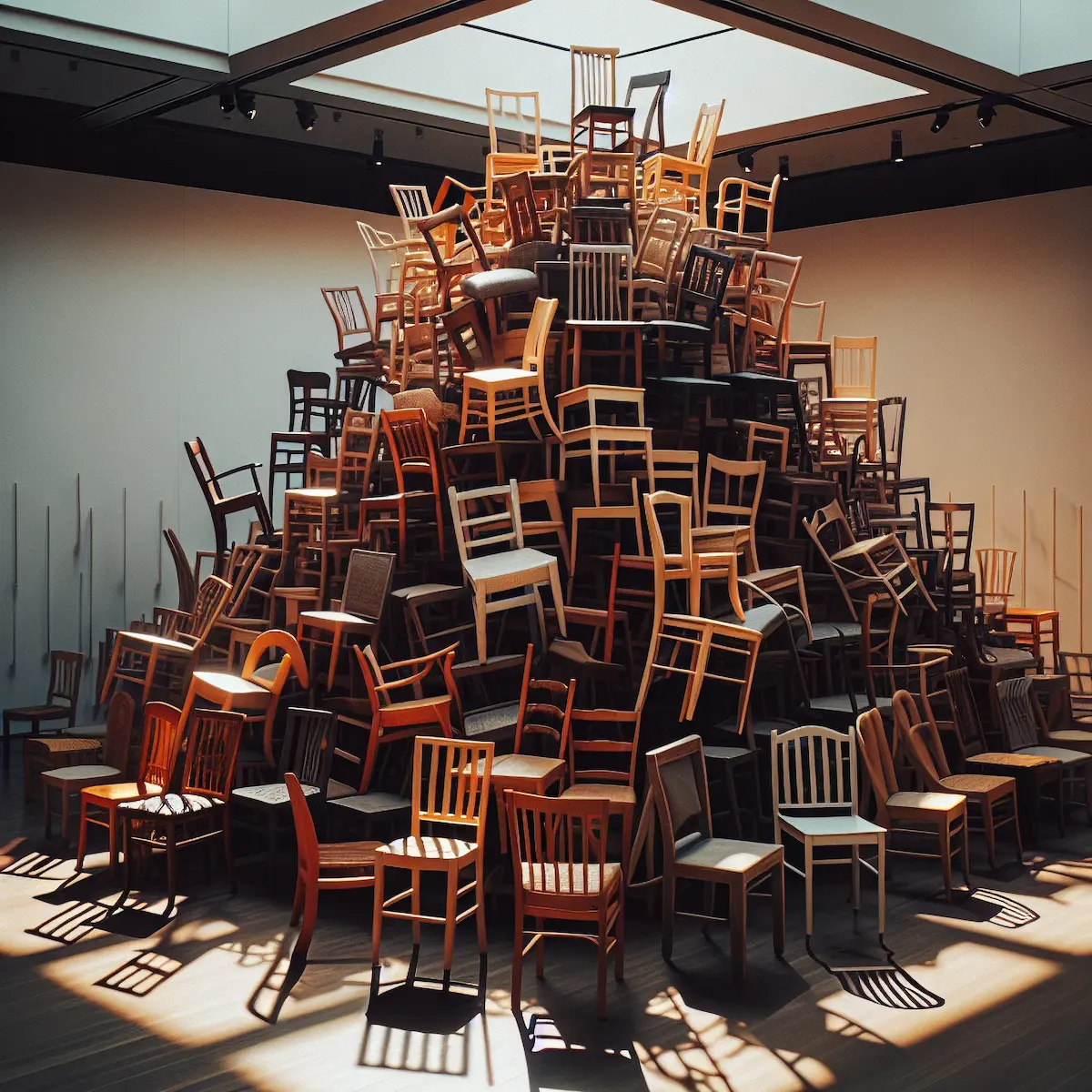
This isn’t due to poor planning or lack of discipline. It’s simply how hospitality operates. When you’re managing service, events, guests and staff, furniture storage rarely tops the priority list.
Storage Is Designed for Day One – Not Year Three
Most commercial furniture storage spaces are planned around an opening layout or a refurbishment. Quantities are known. Layouts are logical. Everything has a place. It looks better than it has in years.
Fast-forward a few years, and the reality looks very different:
- Quantities have increased
- New furniture styles introduced
- Pieces disappear into a jungle of rising stacks
- Nothing ever seems to be retired, on the off chance it might be needed
Storage space doesn’t scale, but hospitality requirements always do.
Furniture Moves Constantly – Storage Rarely Does
Why Hospitality Furniture Storage Always Ends Up a Mess (And It’s Not Your Fault)
Hospitality spaces are fluid by nature. Meeting rooms adapt to private dining parties. Lounges host gatherings. Event layouts change weekly, sometimes daily, from theatre seating to banqueting.
Over time, stacks get mixed. Access becomes restricted and awkward. Usable furniture ends up buried behind items no one wants to move, in case it triggers a domino effect and everything comes tumbling down.
Eventually, perfectly good chairs and tables become permanent fixtures, not because they’re needed, but because they’re no longer reachable within the time it takes to reset the space.
Time Pressure Always Wins
When a space needs to be turned around quickly, organisation takes a back seat. Chairs are stacked where there’s space, not where they belong. Folding tables are leaned rather than stored. No one has time to keep to the system; demand overrides all… just get the room ready.
Multiply that by hundreds of room turnarounds a year, and you guessed it, disorder becomes inevitable.
When Storage Stops Being Storage
At a certain point, hospitality furniture storage quietly becomes a holding zone:
- Furniture waiting for repair
- Items that might be needed again
- Pieces that no longer fit the current layout
The result isn’t just a mess, it’s an inefficient, costly, and unsustainable operation. Staff spend longer searching, furniture gets damaged, and venues often end up buying more furniture simply because they can’t access what they already own. Sound familiar?
How Hospitality Venues Stay in Control
The venues that manage this well don’t rely on perfect organisation. They choose furniture and solutions that facilitate the ever changing possibilites.
That usually means:
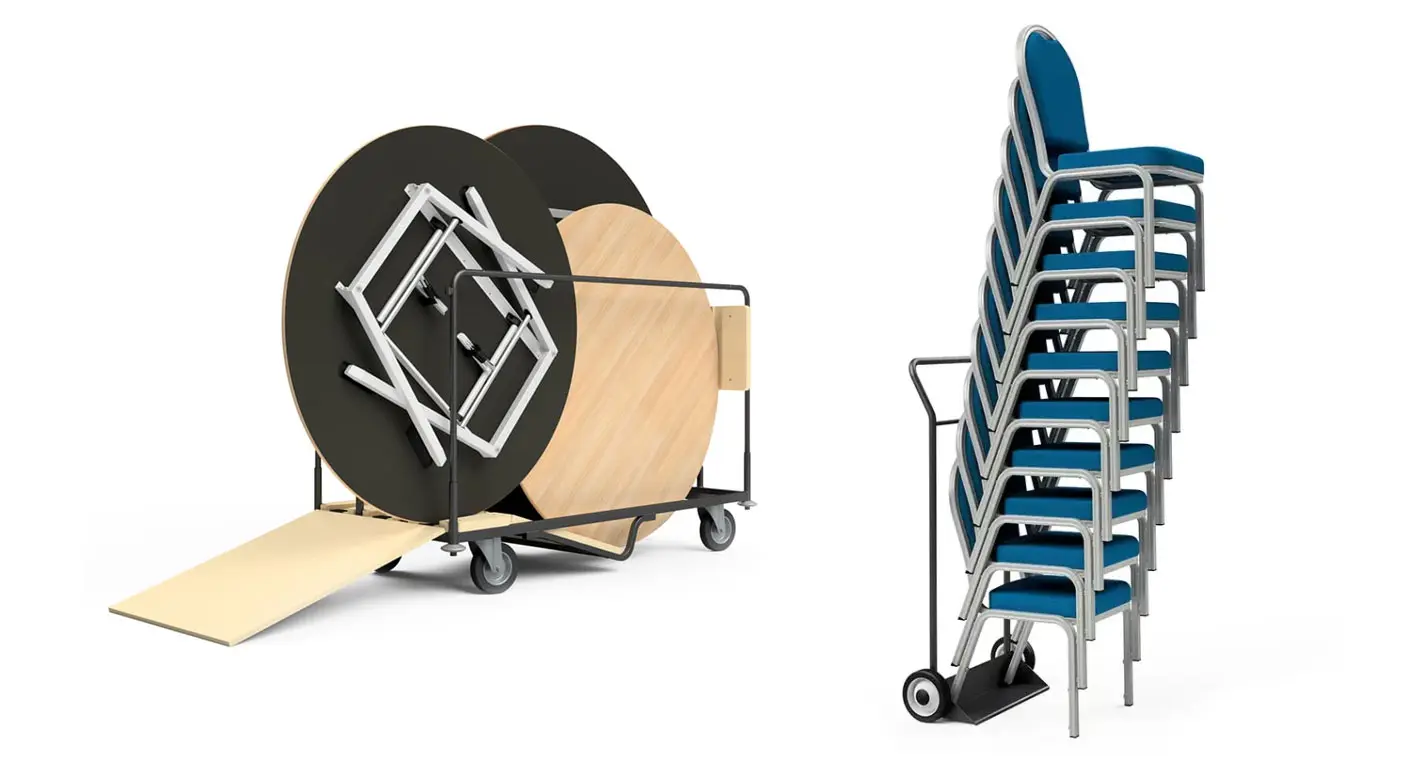
- Stackable, space-efficient chairs
- Tables designed for easy nesting, folding or stacking
- Allowing adequate access for chair and table trolleys
- Movable partition screens that help zone spaces or discreetly conceal overflow
- Storage layouts based on how furniture is actually moved, not how it looks on a drawing
It’s less about tidiness, more about realism.
The Takeaway
Commercial furniture storage spaces that become disorganised aren’t a failure. It’s a natural by-product of busy, multi-functional hospitality venues.
Successful venues don’t fight that reality, they design around it. This is exactly why Burgess Furniture focuses on flexible, modular, stackable furniture and partition solutions. Not to create a picturesque storage space, but to support how venues really operate day to day, year after year.
If you’d like to improve how your furniture stores and moves day to day, Burgess Furniture can help. Contact our expert team on hello@burgessfuniture.com or call us on +44 (0)33 0333 9258.